
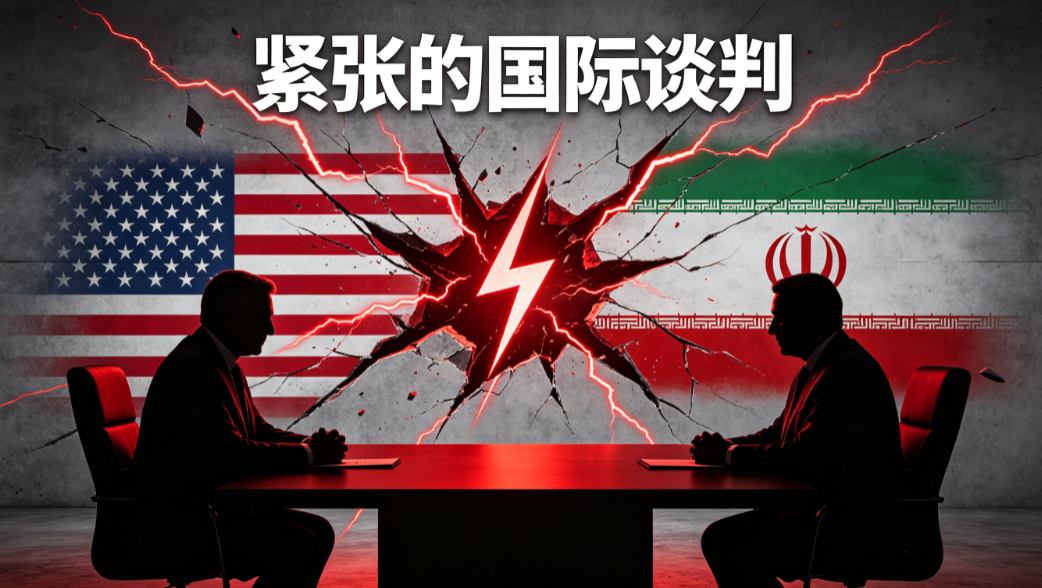
Trump's Threatening Remarks Disrupt Talks; Why Do US-Iran Switzerland Negotiations Hit Another Stalemate?
Keywords: US-Iran talks, Switzerland talks, Trump, Iran, sanctions, nuclear issue, diplomatic mediation, regional situation
Introduction
On the 21st local time, the US-Iran talks at Bürgenstock, Switzerland, which had been seen as an important window for easing tensions, were abruptly suspended due to US President Trump's tough remarks against Iran that day. The Iranian delegation protested by pausing the talks, showing that the contradictions between the two sides on trust foundations, compliance issues, and regional security issues remain sharp. Although Qatar, Pakistan and others are still actively mediating, judging from the current situation, the talks are still far from a substantive breakthrough.
Talks Suspended: Escalating Rhetoric Interrupts Diplomatic Process
According to Iranian sources on the 22nd, the US-Iranian delegations began talks around 15:00 on the 21st, lasting about one and a half hours before recessing for internal consultations. However, just before the talks were about to resume, Trump warned Iran on social media to immediately stop its "proxy" actions in Lebanon, otherwise the US would again strike Iran, and "more violently."
This statement quickly changed the atmosphere of the talks. The Iranian delegation believed that the US releasing threatening information during the talks was not conducive to building a dialogue environment and was contrary to the basic sincerity that diplomatic consultations should follow. Therefore, the Iranian side refused to return to the meeting room and continue negotiations, and the meeting immediately entered a state of suspension.
From the perspective of diplomatic practice, negotiation and pressure inherently have tension. When one party openly releases a military deterrent signal during dialogue, the other party often views it as a violation of the principles of negotiation. This suspension is a concentrated reflection of this fragility of trust.
Core Dispute: Compliance Issues Become Negotiation Focus
Rather than saying the talks were suspended due to a single social media post, the deeper reason lies in the long-term disagreement between the two sides over "promise fulfillment." During the talks, the Iranian side clearly protested that the US had broken its promises, especially pointing out that the US had not implemented the relevant content of the first article of the memorandum of understanding.
According to sources, the Iranian delegation demanded that the US fulfill its existing commitments as soon as possible, including unfreezing Iran's frozen assets and issuing sanctions exemptions for Iran's oil exports. For Iran, these are not subsidiary issues but key indicators of whether the US has the sincerity to negotiate. If commitments remain on paper for a long time, Iran will find it difficult to accept entering more sensitive nuclear issue negotiations.
On the nuclear issue, the Iranian side also put forward clear conditions: the US must first fulfill its obligations under Articles 1, 4, 10, and 11 of the memorandum before substantive nuclear talks can begin. This position reflects Iran's basic judgment: without upfront implementation, there can be no subsequent trust.
Third-Party Mediation Continues: Dialogue Not Completely Closed
Although the Iranian delegation refused to return to the venue, the talks have not completely ended. Sources indicate that Qatar and Pakistan continue to mediate, and information is still being conveyed between the two sides through intermediaries. This shows that relevant parties have not given up on diplomatic solutions and still hope to avoid further escalation of the situation.
The existence of third-party mediation has practical significance. On one hand, it provides a buffer between the US and Iran to prevent direct confrontation from spilling over quickly; on the other hand, it retains technical channels for resuming talks. Especially in the current complex Middle East situation with frequent regional proxy conflicts, any local friction can be magnified, affecting the broader security landscape.
However, mediation can only delay the crisis, not replace consensus. If both the US and Iran remain locked in a counter logic of "pressure first, dialogue later" or "implement first, negotiate later," the mediation effect of intermediaries will ultimately be limited.
Conclusion
The US-Iran talks at Bürgenstock, Switzerland once again show that the key to diplomatic negotiations is not just sitting together, but the ability to form stable and verifiable mutual trust mechanisms. Trump's threatening remarks directly triggered Iran's suspension of talks, reflecting the long-accumulated fragility in US-Iran relations. Meanwhile, disputes over unfreezing assets, sanctions exemptions, and preconditions for nuclear issues indicate that the two sides have not found a meeting point on core interests.
Whether talks can resume depends on whether the US is willing to repair trust through action, and whether Iran believes dialogue still has practical benefits. Against the backdrop of continued tension in the Middle East, if either side continues to place tough rhetoric above diplomatic procedures, it will only further compress the space for peaceful resolution. The real test for the US and Iran is not whether they can continue talking, but whether they can rediscover the boundaries and sincerity of negotiations amidst crisis and confrontation.